

Diego Cebreros
diego-manuel.cebreros-saettone@centralesupelec.fr
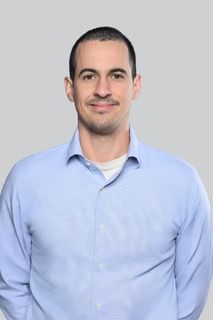
Biography: Diego Cebreros is an Assistant Professor at CentraleSupélec and an expert in energy markets, electric vehicle integration and carbon markets. Born in 1991 in Lima, Peru, he works at the intersection of technology, economics, and regulation, with a strong interest in how information systems can enhance societal well-being.
He recently completed a Ph.D. in Engineering–Economics in collaboration with Stellantis (4th largest car manufacturer) and Université Paris-Saclay (CentraleSupélec), where his research focused on the development of Vehicle-to-Grid (V2G) information systems and their economic implications. His work examined how better coordination and information sharing among actors can enable the sustainable integration of electric vehicles into power systems.
Before beginning his Ph.D., Diego worked at 2° Investing Initiative (2DII) in France on aligning institutional investment portfolios with climate commitments. Prior to that, he spent seven years in Latin America as a consultant and partner at Deuman, a leading firm in climate change and energy policy in Latin America, where he advised governments, multilateral institutions, and private companies.
Diego holds a Master’s degree in Network Industries and Digital Economy (Université Paris-Dauphine), a Master’s degree in Theoretical Economics (Universidad del Pacifico) and a Bachelor’s degree in Environmental Engineering (Universidad Nacional Agraria La Molina).
Research: Diego’s research explores how digitalization and information systems can support the transition toward cleaner and more decentralized energy systems. His main research lines include:
- Vehicle-to-Grid (V2G) and Virtual Power Plants (VPPs) He analyzes the value of information in enabling electric vehicles to behave as decentralized storage assets. His work focuses on the design of information architectures, operational coordination among actors, and the economic mechanisms that allow V2G and emerging VPPs to participate efficiently in electricity markets.
- Market Design and Regulation of Decentralized Electricity Systems Diego studies how electricity markets must evolve to integrate distributed energy resources, electric mobility, and real-time flexibility needs. His work includes the evaluation of regulatory frameworks, pricing mechanisms, and data-sharing requirements.
Simulation for Policy and Market Analysis Methodologically, Diego uses simulation techniques to understand complex socio-technical systems, evaluate policy outcomes, and study the division of value among actors in energy and mobility ecosystems.
Teaching Activities: Diego is the academic coordinator of the Electric Mobility course at the Florence School of Regulation (FSR). He also teaches and designs courses in Energy Economics, Economics of Digital and Network Industries, Management of Disruptive Technologies, a course he created to explore how complexity science helps explain technological disruptions in socio-technical systems.
He regularly delivers seminars and lectures on electric mobility, energy regulation, and the role of information in the energy transition.
Administrative: He served during two years as a member of the Advisory Board of the European Project SCALE and is a research associate of the Chair of Governance and Regulation at Université Paris-Dauphine. Furthermore, he has served as a member of the COLAB as a PhD (a governance of laboratory) being an important actor in the update of the governance statues. He has also held positions as a president of the Peruvian national association of Laser saling and vice-president of the association for climbing ‘Huayllay’